Quick answer: Digital marketing helps businesses reach the right people online, spend less than on most traditional channels, track what works and build lasting customer relationships. Instead of guessing, you can see who clicks, who buys and which channel pays off. That makes growth easier for any business, and it helps small businesses compete with bigger brands.
What is digital marketing?
Digital marketing means promoting a business through online channels. These include search engines (SEO), social media, email, content marketing and paid ads. In other words, it covers any marketing that reaches people on their phones, laptops or apps. Each channel does a different job. SEO brings steady search traffic, social media builds awareness, email keeps customers coming back and paid ads deliver faster results.
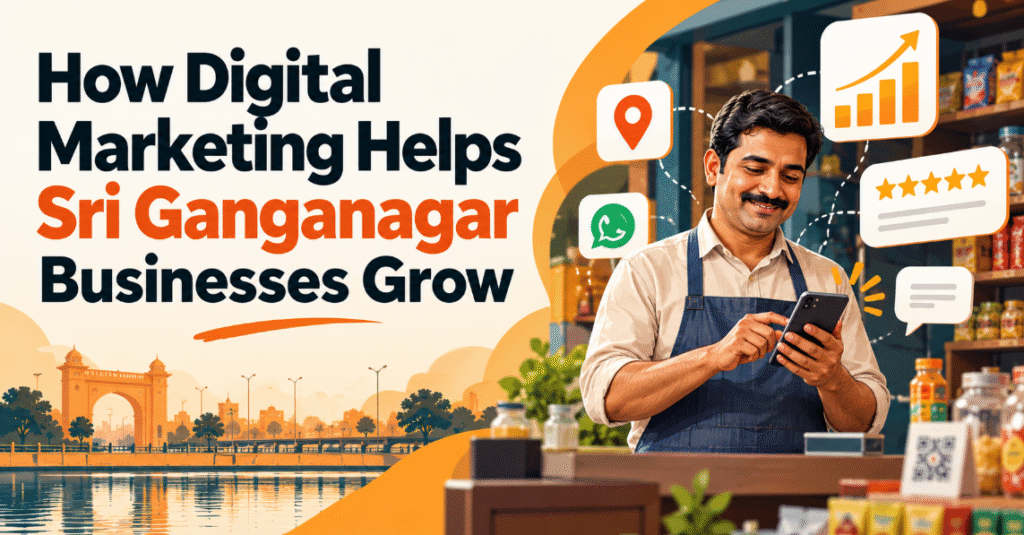
It doesn’t have to be complicated. A sweet shop in Sri Ganganagar, for example, might use a Google Business Profile, an Instagram page and a WhatsApp list for festival orders. That’s digital marketing too. You don’t need a big budget to start, so most businesses can begin with one or two channels.
6 key ways digital marketing helps businesses
Here are the main benefits of digital marketing at a glance, followed by the detail on each.
| Benefit | What it means | Main channels |
| Wider, targeted reach | Reach the people who need you | SEO, social media, paid ads |
| Lower cost | Pay for results and adjust your budget anytime | Paid ads, email, content |
| Measurable results | See exactly what works | Analytics tools |
| Customer relationships | Stay in touch and build loyalty | Email, social media |
| Trackable leads and sales | Follow a customer from click to purchase | Landing pages, retargeting |
| Fair competition | Compete with bigger brands on a small budget | Local SEO, social media |
1. Reaches a wider, targeted audience
Traditional ads reach everyone nearby, whether they care or not. Digital marketing lets you choose your target audience by location, age, interests and search behaviour. So a coaching institute in Sri Ganganagar can show ads only to students searching for courses in the city and towns like Suratgarh. Local search also helps nearby customers find you, which means your reach grows while wasted spend shrinks.
2. Costs less than most traditional marketing
A newspaper ad or hoarding needs a big payment upfront. Online, you can start small and pay for clicks or results instead. For instance, you can run paid ads on a modest daily budget. You can pause them any time and move money to what works. Email and content marketing often cost less still. As a result, small businesses can test ideas without much risk.
3. Makes results measurable
Analytics tools show how many people visited, clicked, signed up or bought. You can track your conversion rate, cost per lead and return on investment (ROI) for each campaign. That said, numbers only help if you check them. So review them regularly, then stop what doesn’t work and do more of what does. Print and radio rarely offer that level of detail.
4. Builds customer relationships and loyalty
Marketing doesn’t end at the sale. Email newsletters, social media replies and personalised offers keep customers engaged. For example, a festival offer or a restock alert on WhatsApp can bring a past customer back. A simple social media calendar also keeps your posting consistent. Over time, these habits build brand loyalty and improve customer retention. In addition, keeping a customer is often cheaper than finding a new one.
5. Drives leads and sales you can track
Digital marketing lets you follow a customer from the first click to the final purchase. A tractor dealer, for instance, can send people searching for a new tractor to a landing page that collects their phone number. Retargeting ads can then remind visitors who left without enquiring. Then you can see which channel brought each lead. So lead generation becomes a process you can improve, not a guess.
6. Helps small businesses compete with bigger brands
A kinnow grower near Sri Ganganagar can’t outspend a national fruit brand on TV. However, they can show the orchard and packing on Reels and answer buyers quickly on WhatsApp. Local SEO, for example, helps a neighbourhood business show up exactly when nearby people search. In short, these online marketing advantages give smaller businesses a real shot at attention. Our guide explains why social media marketing is powerful for local businesses.
Why digital marketing is important for small business
Customers search, compare and buy online before they ever visit a shop or call a business. So if you aren’t visible online, you’re missing a big part of the market. That’s the core of the importance of digital marketing. It also explains the need for digital marketing, even for the smallest business. In Sri Ganganagar, the food basket of Rajasthan, mustard oil mills and kinnow packers can also find buyers online.
Three reasons stand out:
- Visibility: People find you when they search, not only when they walk past.
- Trust: A working website, good reviews and an active social media page show that your business is real.
- Speed: You can launch an offer today and see results this week.
For example, a clinic in Sri Ganganagar with a Google Business Profile and a few reviews can get more enquiries than one with no online presence. That’s why digital marketing is important for small business owners who rely on word of mouth. Online visibility helps word of mouth travel further. AI search is also changing how people find businesses, so clear, consistent details matter.
Digital marketing vs traditional marketing
Traditional marketing still works for some businesses. However, the two approaches differ in a few key ways.
| Factor | Digital marketing | Traditional marketing |
| Reach | Targeted by location, interest and behaviour | Broad, local or national |
| Cost | Flexible, starts small | Often higher upfront |
| Tracking | Detailed and near real-time | Limited |
| Speed of change | Edit or pause in minutes | Slow once printed or aired |
| Two-way contact | Comments, messages and replies | Mostly one-way |
Neither is always better, and many businesses mix both. A shop sign plus a Google Business Profile is a simple example. Still, the advantages of digital marketing in tracking and flexibility are hard to match.
How to get started with digital marketing
You don’t need to do everything at once. Start with three steps:
- Set one goal. For example, aim for 20 new enquiries a month or more repeat orders. A clear goal tells you which channel to try first.
- Pick one or two channels. Choose where your customers already spend time, such as Instagram for a boutique, WhatsApp for a sweet shop or Google search for a plumber.
- Review weekly. Check what worked, drop what didn’t and adjust.
Most small businesses start with a Google Business Profile, a simple website and one social media account. Need a website first? Read these tips for hiring a website designing agency in Sri Ganganagar.
What to keep in mind
Digital marketing isn’t instant, and it takes ongoing effort. Most digital marketing benefits build over time, especially from SEO and email lists. Competition can also be high, and paid ads stop delivering the moment you stop paying for them. Still, a clear goal and regular reviews keep these challenges manageable.
FAQ
How does digital marketing help businesses?
It helps businesses reach the right audience online, spend less than on most traditional channels, track results and build lasting customer relationships.
Why is digital marketing important for small businesses?
Customers search and buy online first. A small business with a visible website, honest reviews and an active social media page earns trust and finds new customers without a large budget.
What are the main advantages of digital marketing?
The main advantages are targeted reach, flexible costs, measurable results, stronger customer relationships and trackable leads. Together, they help smaller businesses compete with larger brands.
Is digital marketing better than traditional marketing?
Not always, but it’s more flexible and easier to measure. Many businesses combine both, so choose based on where your customers spend their time.
What is digital marketing for small businesses?
It means promoting your business through online channels such as a website, search engines, social media and email. Small businesses can start with one or two channels, then add more as they grow.